
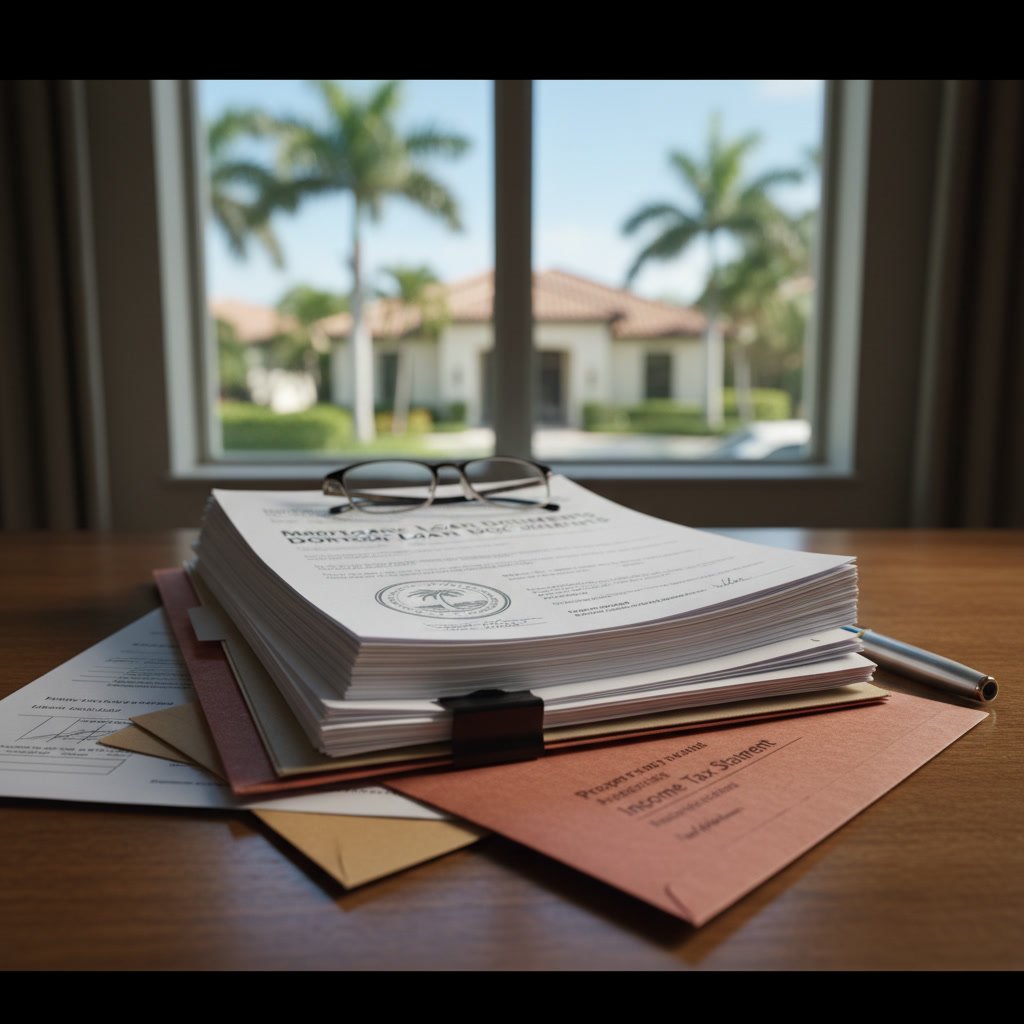
Applying for a mortgage can feel overwhelming when you’re unsure what paperwork to gather. Missing even one key document can delay your approval by weeks or derail your closing date entirely. Understanding exactly which mortgage loan documents Florida lenders require saves you time, reduces stress, and speeds up your path to homeownership.
This guide walks you through every document category lenders need, explains why each matters, and shows you how to prepare your financial records before you apply. Whether you’re buying your first home or refinancing, knowing what to expect makes the entire process smoother.
Core Income Verification Documents
Lenders need proof that you earn enough to repay the loan. Income verification sits at the heart of every mortgage application, and the specific documents you’ll need depend on how you earn your money.
Pay Stubs and Employment Verification
If you’re a W-2 employee, gather your last two months of consecutive pay stubs. These must show year-to-date earnings, your employer’s name, and your gross income before deductions. Lenders typically verify this information directly with your employer using a written or phone verification.
Self-employed borrowers face different requirements. You’ll need two years of personal and business tax returns, along with a current profit and loss statement. Many self-employed applicants in Florida work with a tax preparation service to ensure their returns present income clearly to mortgage underwriters.
Tax Returns and W-2 Forms
Most lenders require two years of personal tax returns, including all schedules. They’ll review your 1040 forms along with W-2s from each employer during that period. If you have rental properties or investment income, expect to provide additional schedules that detail those earnings.
Business owners should provide both personal and business returns for the same two-year period. Corporate returns (1120) or partnership returns (1065) help lenders understand your share of business income and how stable that income stream has been over time.

Asset and Bank Account Documentation
Lenders verify you have enough cash for your down payment, closing costs, and reserves. The mortgage loan documents Florida underwriters request in this category prove where your money comes from and that you’ve maintained stable savings.
Bank Statements
Provide two months of statements for every checking, savings, and money market account you own. These must be complete statements showing every page, including blank pages. Lenders scrutinize deposits to ensure your down payment comes from verified sources, not undisclosed loans.
Large deposits over $1,000 that aren’t payroll require explanation letters and documentation. If a relative gifted you money, you’ll need a signed gift letter stating the funds don’t require repayment.
Investment and Retirement Accounts
Recent statements from 401(k) accounts, IRAs, stocks, bonds, and mutual funds count toward your assets. Even if you don’t plan to liquidate these accounts, they demonstrate financial stability and reserves that make you a lower-risk borrower.
If you’re using retirement funds for your down payment, lenders need documentation showing you can withdraw the money without penalties or proof that you understand the tax consequences.
Pro Tip: Start gathering your mortgage loan documents Florida lenders need at least 60 days before you plan to apply. This gives you time to track down missing statements or correct errors on your tax returns without delaying your loan.
Credit and Debt Documentation
Your credit profile determines your interest rate and loan terms. While lenders pull their own credit reports, you should review yours first and address any issues that might cause problems.
Bring documentation for all current debts including credit cards, auto loans, student loans, and personal loans. Lenders calculate your debt-to-income ratio by comparing monthly debt payments to your gross income. Most conventional loans require this ratio to stay below 43%.
If you’ve worked to improve your credit recently, documentation of paid collections, settled accounts, or a credit repair process can help explain recent positive changes on your report. For borrowers actively building credit, a credit building program before applying often results in better loan terms.
Property and Purchase Documents
Once you’ve found a property in Florida, you’ll need documentation related to the home itself. The purchase contract sits at the center of this document group.
Your fully executed sales contract must include all addendums, contingencies, and amendments signed by both buyer and seller. This document tells the lender the purchase price, closing date, and any seller concessions that affect the loan amount.
If you’re buying a condo or townhome, provide HOA documents including the master insurance policy, HOA budget, and CC&R documents. Lenders need to verify the association maintains adequate reserves and insurance coverage.

Identification and Residency Proof
Every borrower and co-borrower must provide government-issued photo identification. A valid driver’s license, state ID, or passport works. If your ID shows an address different from your current residence, bring additional proof of your current address like utility bills or lease agreements.
Social Security cards or documentation showing your Social Security number verify your identity for credit checks and final loan documents. If you’ve changed your name through marriage or legal proceedings, provide documentation connecting your current name to previous names that might appear on credit reports or tax returns.
Additional Documents for Specific Situations
Your unique financial situation might require additional paperwork beyond the standard mortgage loan documents Florida lenders collect from every borrower.
Divorce or Legal Separation
Complete divorce decrees and separation agreements help lenders understand obligations like alimony or child support. If you receive support payments, provide proof you’ve received consistent payments for at least six months. If you pay support, these obligations count against your debt-to-income ratio.
Non-Traditional Income Sources
Rental income requires lease agreements and possibly Schedule E from your tax returns. Social Security, disability, or pension income needs award letters or bank statements showing regular deposits. Commission-based workers should provide two years of tax returns to establish an average income.
Recent Life Changes
Changed jobs recently? You’ll need an offer letter from your new employer stating your salary, start date, and employment type. Job changes in the same field typically don’t hurt your application, but career changes might require additional documentation or a longer wait.
Bankruptcy or foreclosure in your past requires discharge papers and an explanation letter. Most conventional loans require a two to four year waiting period after these events, while FHA loans may allow shorter timeframes.
Key Takeaway: Organize your documents in labeled folders, both physical and digital. Create copies of everything before submitting originals. This preparation speeds up your application and helps you respond quickly when underwriters request additional information.
How to Organize Your Documents Before Applying
Poor organization causes more loan delays than missing documents. Create a simple system before you start your application to keep everything accessible.
Use a checklist to track which documents you’ve gathered and which you still need. Group related documents together: all income verification in one folder, all asset statements in another, identification and legal documents in a third.
Make digital copies of every document. Scan or photograph each page clearly. Many lenders now accept digital uploads, and having electronic versions lets you respond to requests within hours instead of days.
Review your tax and accounting records for accuracy before submitting them. Errors or inconsistencies between your tax returns and other financial documents raise red flags for underwriters. If you discover problems, address them proactively with documentation explaining any discrepancies.

Common Document Mistakes That Delay Approvals
Even prepared borrowers make simple mistakes that push back closing dates. Avoid these common problems to keep your application moving forward.
Incomplete bank statements cause frequent delays. Every statement must include all pages, even if some pages are blank. Missing pages force lenders to request new statements, adding days or weeks to your timeline.
Unexplained deposits trigger underwriter questions. If you transfer money between your own accounts, provide documentation showing both the withdrawal and deposit. Large cash deposits are especially problematic since lenders can’t verify the source.
Outdated documents waste time. Pay stubs older than 30 days or bank statements from months ago won’t satisfy underwriting requirements. Update your document package if your application process extends longer than expected.
Making major financial changes during the application process creates serious problems. Don’t open new credit cards, take out loans, or make large purchases until after closing. These changes affect your debt-to-income ratio and credit score, potentially invalidating your approval.
If you run a business and need help organizing financial records that clearly demonstrate income stability, professional bookkeeping services can structure your records in ways mortgage underwriters prefer. Clean, organized business finances often make the difference between approval and denial for self-employed borrowers.
Working With Your Lender Throughout the Process
Communication with your loan officer determines how smoothly your application proceeds. Respond to document requests immediately, even if you can’t provide everything requested right away.
If you can’t locate a specific document, tell your loan officer promptly. They might accept alternative documentation or help you obtain replacements. Silence or delayed responses make underwriters nervous and can slow your file to a crawl.
Ask questions when requirements seem unclear. Better to clarify exactly what format or information the lender needs than to submit the wrong documents multiple times. Your loan officer has processed hundreds of applications and can guide you toward the fastest path to approval.
Understand that underwriters might request additional documents even after you’ve submitted a complete application. New questions arise as they review your file more deeply. This is normal, not a sign your loan is in trouble.
Frequently Asked Questions
How far back do mortgage lenders look at bank statements in Florida?
Most lenders require the most recent two months of complete bank statements for all accounts. They may request additional months if they see unusual activity or need to verify the source of your down payment. Some loan programs or special situations might require up to 12 months of statements.
Do I need tax returns if I’m a W-2 employee with no other income?
Yes, most conventional loans require two years of personal tax returns even for W-2 employees with straightforward income. Lenders use these returns to verify the income shown on your pay stubs and W-2 forms and to check for any unreported income or deductions that affect your financial picture.
Can I use gift money for my down payment on a Florida mortgage?
Yes, most loan programs allow gift funds from family members for part or all of your down payment. You’ll need a signed gift letter stating the amount, the donor’s relationship to you, the property address, and a clear statement that the funds are a gift with no expectation of repayment. You’ll also need bank statements showing the donor had the funds and documentation of the transfer.
What happens if I have errors on my tax returns that I already submitted?
If you discover errors on tax returns you’ve already provided to a lender, disclose this immediately. Depending on the nature and size of the error, you may need to file an amended return with the IRS. For significant errors that affect your reported income, work with a tax professional to file amendments before proceeding with your mortgage application. Small errors that don’t materially change your income might be addressed with explanation letters.
How long does document verification typically take in Florida?
Initial document review usually takes three to five business days after you submit a complete application. The full underwriting process, including verification calls to employers and detailed review of all documents, typically takes two to four weeks. Incomplete applications or missing documents can extend this timeline significantly, sometimes by several weeks or months.
Get Professional Help With Your Mortgage Documentation
Gathering and organizing the right mortgage loan documents Florida lenders require determines whether your home purchase closes on time or faces frustrating delays. Income verification, asset documentation, credit records, and property paperwork all need to be complete, current, and accurate.
Taking time to review your financial records before applying helps you spot potential issues early. For self-employed borrowers, business owners, or anyone with complex income sources, professional financial guidance ensures your documentation presents your finances in the best possible light.
Quick Tax and Credit Solutions Inc helps clients throughout Texas and Florida prepare the financial documentation mortgage lenders require. Our team at 939 W Jefferson Blvd, Suite 109 Dallas, TX 75208 has helped hundreds of borrowers organize tax returns, financial statements, and supporting documents for successful mortgage loan applications. Call +12146471669 to discuss how we can help you prepare your financial documents for a smooth mortgage approval process.